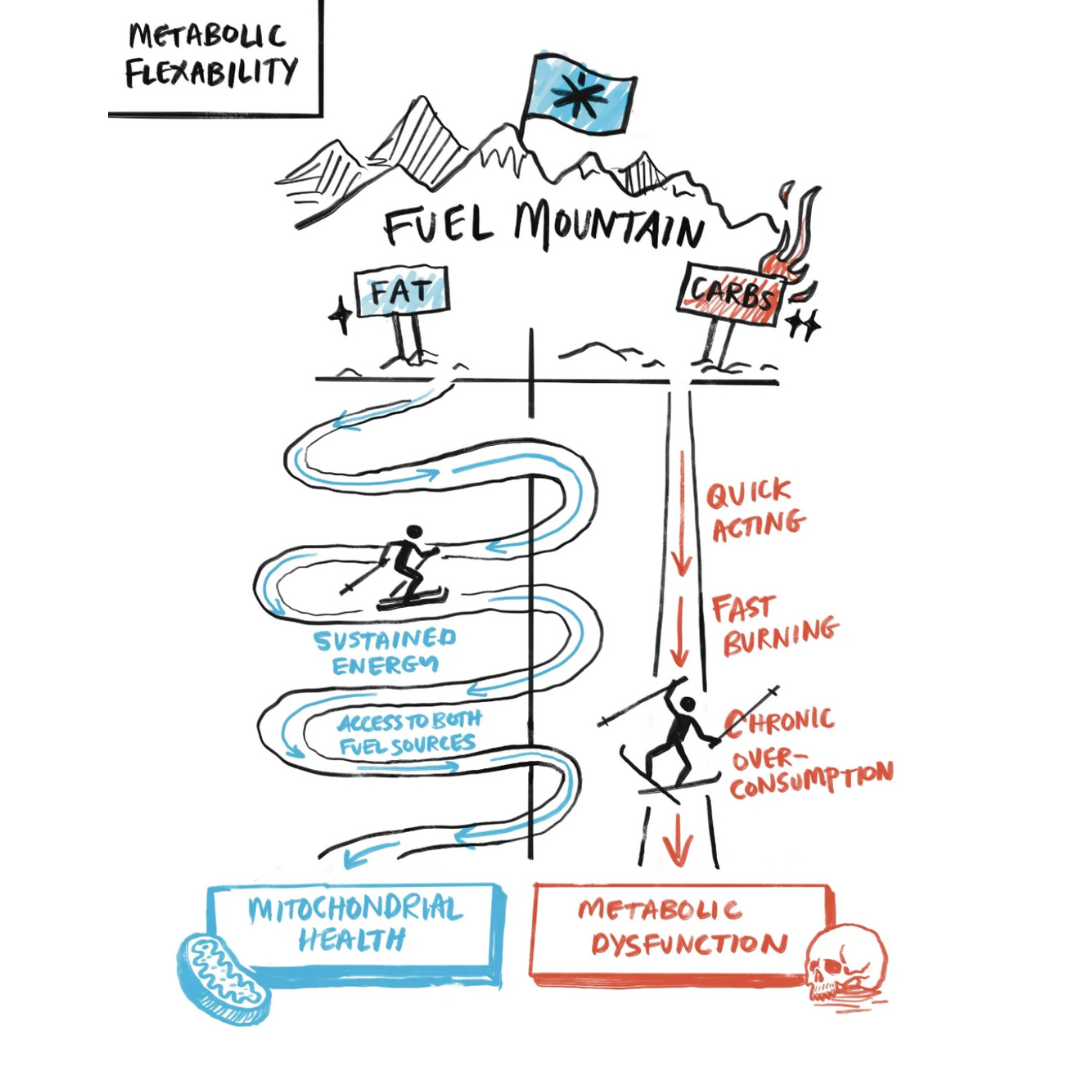
Fatty Liver Isn’t Just About Alcohol
What Visceral Fat, Muscle Mass and Metabolic Health Have to Do with Your Liver
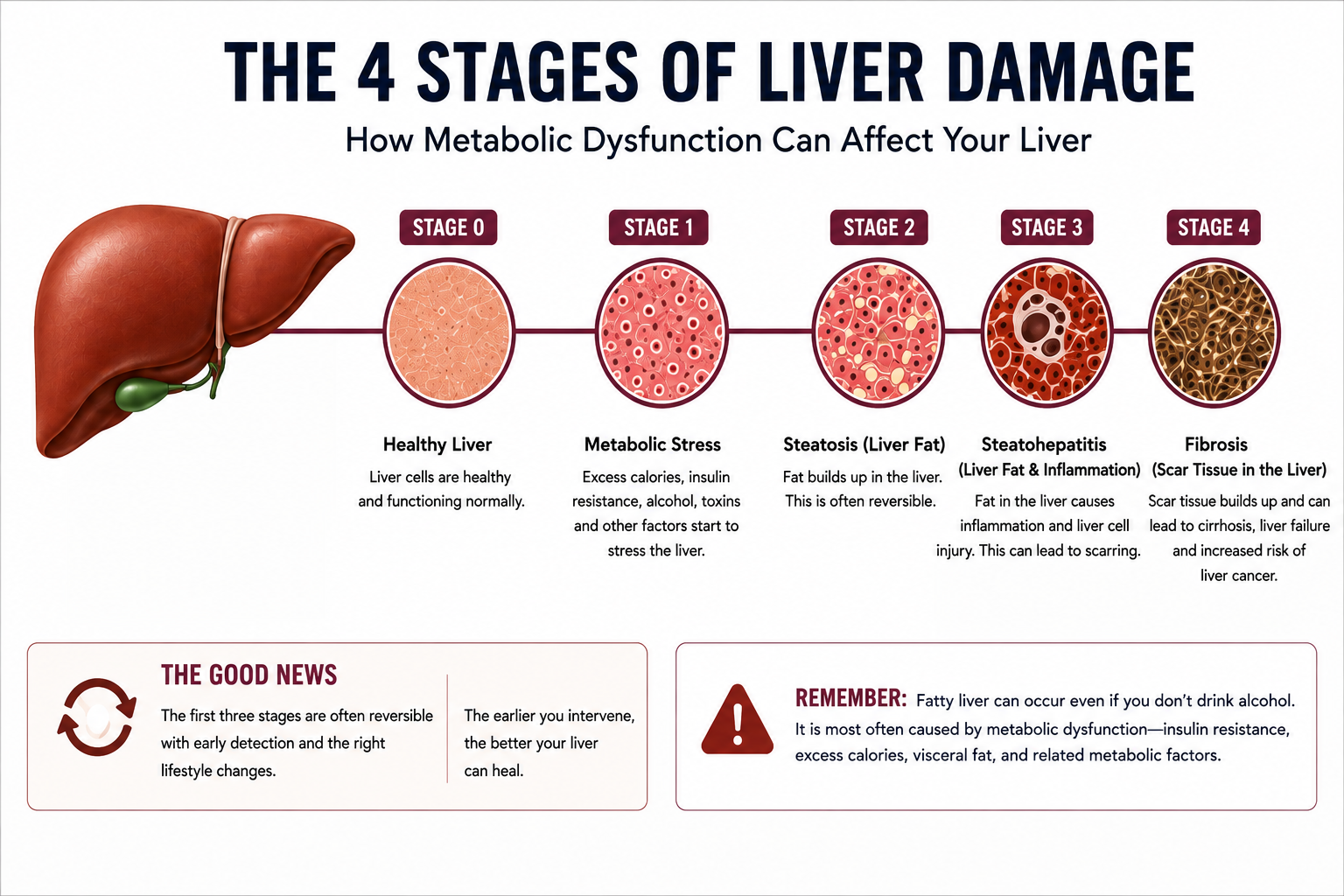
When most people hear the words fatty liver disease, they assume it has something to do with drinking too much alcohol.
That’s only part of the story.
In a recent episode of The Peter Attia Drive, Dr. Peter Attia discussed metabolic liver health and why the liver can act as an early warning system for metabolic dysfunction. One of the biggest takeaways is something many people still don’t realize: you can develop fatty liver disease even if you don’t drink alcohol at all.
The condition once called NAFLD, "non-alcoholic fatty liver disease" is now called MASLD, or metabolic dysfunction-associated steatotic liver disease. The new name better describes what is actually happening. This isn’t simply a problem caused by eating too much fat. And, it isn't only an alcohol problem. It is often part of a much bigger metabolic picture involving insulin resistance, excess energy intake, visceral fat, low muscle mass, blood sugar regulation, triglycerides and other cardiometabolic factors. And importantly, many of those factors can be improved.
Your Liver Is a Metabolic Organ
The liver does far more than process alcohol or “detox” the body.
It plays a major role in how we handle glucose, fats, cholesterol and energy. After we eat, insulin helps signal the liver to take glucose out of the bloodstream and store it for later. Between meals, the liver helps release glucose back into circulation to keep blood sugar stable.
When this system works well, we rarely think about it. But when metabolic health begins to deteriorate, the liver is often one of the first places we can see the effects. If more energy is consistently coming in than the body is using, that energy has to be stored somewhere. Eventually, fat can begin accumulating in places we don't want it, including inside the liver and around our internal organs.
That is where visceral fat becomes especially important.
Visceral Fat Is Different from the Fat You Can Pinch
We tend to judge body fat by what we can see in the mirror, but metabolically, where fat is stored matters tremendously.
Subcutaneous fat is the fat stored underneath the skin.
Visceral fat is stored deeper inside the abdomen around the internal organs.
Visceral fat is particularly relevant to liver health because fatty acids released from visceral fat have a much more direct route to the liver. Higher levels of visceral fat are strongly associated with insulin resistance, fatty liver and greater cardiometabolic risk. This also helps explain why body weight or BMI alone can be misleading. Someone can look relatively lean, fall into a “normal” BMI category and still carry too much visceral fat or too little muscle. Conversely, another person may weigh more but have significantly more muscle and a healthier metabolic profile.
Body composition tells us much more than body weight alone
This is one reason we measure visceral fat at CrossFit Winter Park.
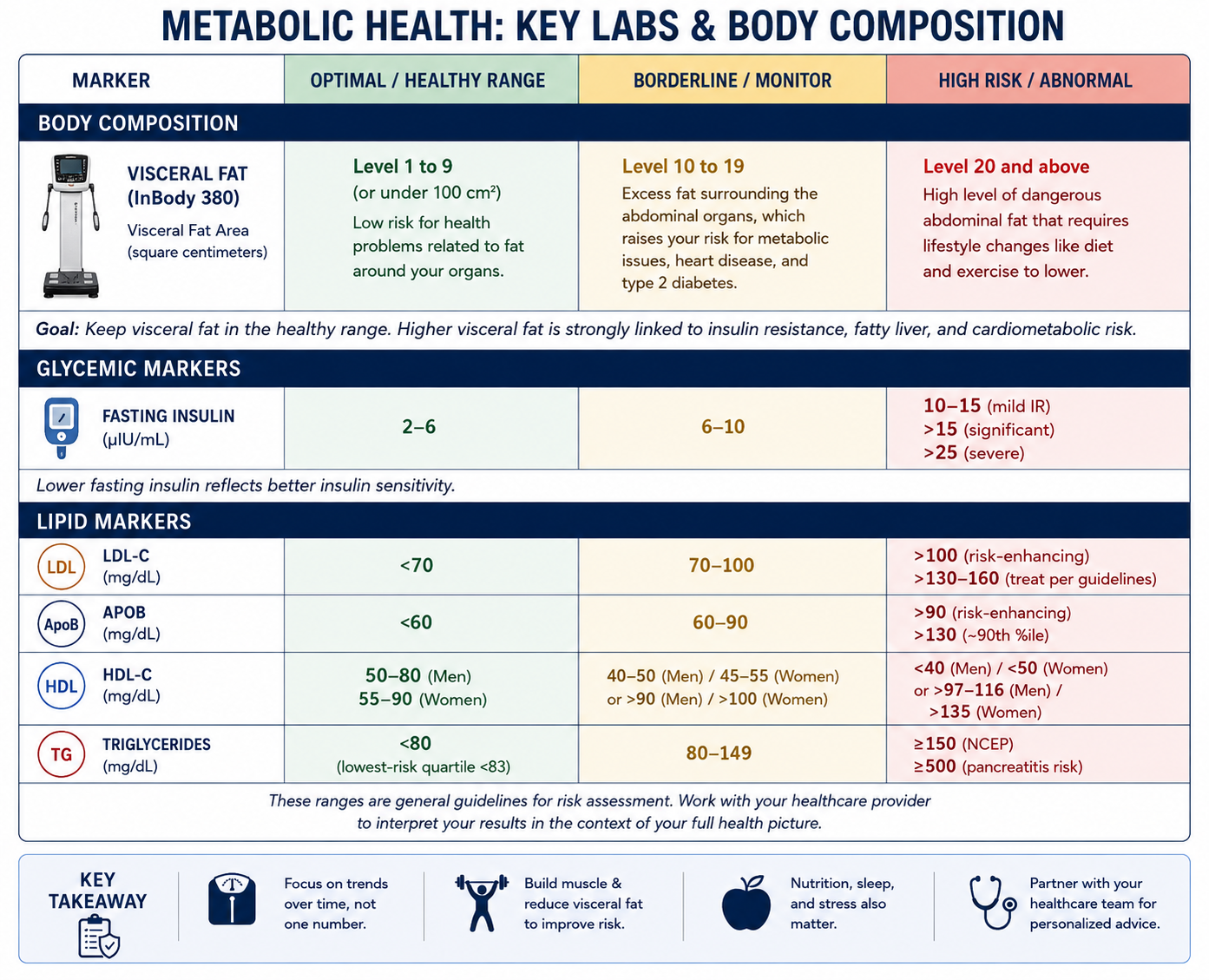
With our InBody380, we can look beyond the number on the scale and track measurements including:
- Skeletal muscle mass
- Body fat mass
- Percent body fat
- Visceral fat
That doesn't diagnose liver disease, and an InBody scan is not a replacement for bloodwork or medical imaging. But it gives us another valuable piece of the metabolic-health puzzle and allows us to track changes over time.
For many people, improving visceral fat may be a far more meaningful health goal than simply trying to reach a certain number on the scale.
More Muscle Does More Than Make You Stronger
One of the most interesting connections in metabolic health is the relationship between skeletal muscle and blood sugar regulation. Your muscles are one of the largest places your body can store glucose. Think of muscle as metabolic storage space. After you eat carbohydrates, some of that glucose can be pulled out of the bloodstream and stored inside your muscles as glycogen.
The more muscle tissue you have, the greater your capacity to handle and store glucose. With very little muscle mass, there is less storage space available, placing more of the burden on other tissues, including the liver. This is one reason people with relatively low body weight can still develop metabolic dysfunction. Being “skinny” does not automatically mean being metabolically healthy.
Research discussed by Dr. Attia has also shown an association between greater skeletal muscle mass and a lower risk of metabolic fatty liver disease, with people who gained muscle over time being more likely to see improvement in fatty liver. That makes resistance training much more than a cosmetic tool. Building and maintaining muscle is part of protecting metabolic health, especially as we age.
Fatty Liver Isn't Simply Caused by Eating Fat
Another misconception is that fat in the liver must come from eating too much dietary fat, but the physiology is much more complicated.
When the body consistently receives more energy than it needs, excess calories can eventually be converted into triglycerides and stored. Those excess calories could come from fat, carbohydrates, sugar, alcohol, or simply too much total energy over time.
As insulin resistance develops, the problem can compound. Fat cells begin releasing more fatty acids into circulation, the liver receives more incoming energy, blood glucose regulation worsens and the liver may begin accumulating fat itself.
This is why metabolic liver health can't be reduced to:
“Don't eat fatty foods.”
It is much more about the overall metabolic environment.
Sugar-Sweetened Drinks Can Be Especially Easy to Over-consume
Fructose frequently comes up in discussions about fatty liver, but context matters.
The bigger practical problem isn't necessarily eating a piece of fruit.
It's the enormous amount of sugar and calories that can be consumed very quickly through beverages.
Soda, sweet tea, energy drinks, juices and other sugar-sweetened drinks deliver calories rapidly and usually don't create the same fullness that solid food does.
That makes it remarkably easy to consume several hundred additional calories without realizing it.
For someone trying to improve insulin resistance, visceral fat or liver fat, cutting sugar-sweetened beverages is one of the simplest high-impact changes available.
Alcohol Still Matters. Especially When Metabolic Health Is Already Compromised
None of this means alcohol is harmless to the liver.
Alcohol can independently cause liver fat, inflammation and eventually fibrosis and cirrhosis.
But the important distinction is that alcohol is not required for fatty liver disease to develop.
And when alcohol use and metabolic dysfunction occur together, the combination may be particularly damaging.
Someone who already has insulin resistance, high visceral fat or metabolic fatty liver disease shouldn't assume that alcohol is an unrelated issue simply because their liver disease wasn't originally caused by drinking.
Both pathways can place stress on the same organ.
Normal Liver Enzymes Don't Always Mean Everything Is Fine
Another important point from Attia's discussion: routine liver enzymes such as ALT and AST may remain within the laboratory's normal range during early metabolic liver disease.
Those tests are useful, but they aren't perfect screening tools for early fatty liver. This is why looking at the broader metabolic picture is valuable.
A physician may consider things such as:
- Fasting glucose
- Hemoglobin A1c
- Fasting insulin
- Triglycerides
- HDL cholesterol
- ApoB and other lipid markers
- AST and ALT
- GGT
- Platelet count
- Blood pressure
- Visceral fat and overall body composition
When appropriate, physicians can also use tools such as a FIB-4 score, ultrasound or FibroScan to evaluate whether liver fat or fibrosis may be present. The goal isn't for everyone to start ordering liver tests on themselves. The goal is to understand that metabolic dysfunction often develops as a pattern, not as one abnormal number on one blood test.
The Good News: The Liver Has an Incredible Ability to Recover
The liver is remarkably resilient. Early fat accumulation and inflammation can often improve significantly when the underlying metabolic drivers improve. Even some early fibrosis may regress. That makes early intervention incredibly valuable.
The same basic strategies that protect metabolic health throughout the rest of the body also protect the liver:
- Reduce excess visceral fat
- Build and maintain muscle
- Exercise consistently
- Improve insulin sensitivity
- Avoid chronically overeating
- Limit sugar-sweetened beverages
- Be thoughtful about alcohol consumption
- Monitor meaningful health markers over time
For someone who has excess body fat, weight loss can certainly help, but the goal shouldn't simply be “lose weight.”
A better goal is body recomposition: lose excess fat while preserving or building muscle.
That distinction matters. If someone loses 20 pounds, but loses a significant amount of skeletal muscle along with it, that's very different metabolically from losing predominantly body fat while maintaining muscle.
Health Is More Than a Number on the Scale
This is exactly why we believe health assessments should go beyond body weight. At CrossFit Winter Park, we want people to understand what is happening inside their body, not just what the scale says. Your visceral fat, skeletal muscle mass, strength, blood pressure, blood sugar regulation, cardiovascular fitness and blood markers all provide pieces of the bigger picture.
Our InBody380 body composition testing gives us the ability to track muscle and visceral fat over time, while our Health Hub brings together movement, nutrition, lifestyle coaching, health metrics and collaboration with licensed healthcare professionals.
You don't need to wait until something becomes a diagnosed disease before paying attention to metabolic health.
In many cases, the earlier signs are already giving us an opportunity to make changes. And fortunately, the things that improve liver health aren't exotic detoxes or cleanses. They're many of the same fundamentals we work on every day:
Build muscle. Move consistently. Eat appropriately for your needs. Keep visceral fat under control. And pay attention to your metabolic health before problems become disease.
This article is for general educational purposes only and is not intended to diagnose, treat or provide medical advice. An InBody scan does not diagnose fatty liver disease or other medical conditions. If you have concerns about your liver health, metabolic health or laboratory results, talk with your physician or another qualified healthcare professional.
Source/inspiration: Peter Attia, M.D., The Peter Attia Drive, Episode #405, “Metabolic liver health: how to assess risk, catch dysfunction early, and prevent or reverse liver disease,” August 24, 2026.
Recent Posts